
From Page to Screen: How Heated Rivalry Redefined Queer Romance
The Internet Fell in Love With Heated Rivalry, Here’s Why It Stuck.
by Mams Jagha ★ FEBRUARY 17th, 2026
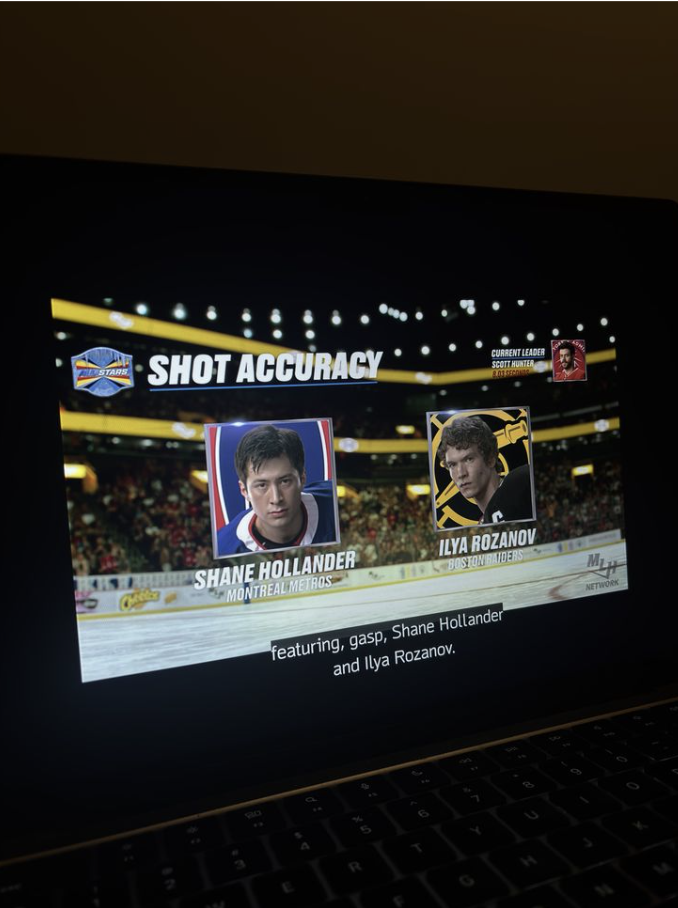
Photo credit: Mams Jagha
Inspired by a mix of famous sports rivalries, a multitude of fictional stories, and their heated tropes, Rachel Reid never predicted the effect her original characters would have in real life. Reid began writing queer sports romance with the intention of telling character-driven love stories that centered around queer joy without censoring down their emotional conflict or desire for one another.
Unable to predict the impact it would hold on not only social media but real-life fans, Heated Rivalry was only ever about two men who envied each other, wanted each other, and finally never wanted to escape each other.
Published as a part of the Game Changers series, Heated Rivalry was already known to some in the book-loving community and those who were just warming up to queer romance. The novel follows two rival professional hockey players, Canadian Shane Hollander and Russian Ilya Rozanov, whose famous on-ice animosity conceals a passionate, secret romance.
However, it wasn’t the enemies-to-lovers trope that made the book stand out; romance readers already loved that. It was the sheer vulnerability between the two men that was entangled in a messy, long-term, and consequential love story.
Heated Rivalry soon found its people among platforms like TikTok and Twitter. Word-of-mouth marketing worked wonders, as readers not only recommended it but also created fan art, dissected its themes and scenes, and obsessively quoted and re-read it.
The hockey setting drew in sports romance fans, but the emotional depth drew in everyone else, and soon it became a staple among not only queer readers but also sports romance readers.
When the adaptation was first announced, on Crave Canada and later with HBO Max, the novel spilled beyond the page. Suddenly, a story that had lived in imaginations was becoming visual, embodied by real actors. Although queer stories have been adapted before, the built-in fanbase that held many emotionally invested viewers already created an important tone around the show.
When clips were released from the adaptation on TikTok, the internet reacted with precise speed. They went viral and were often focused on how “steamy” the scenes were. Although the heat and physical chemistry between the actors was intense and unapologetic, that was not the larger point. The ability to be able to display deep longing, frustration, and history in mere glances, those were the moments that truly mattered and resonated. Where Heated Rivalry separates itself from countless other viral adaptations is the core of the story.
At its core, the story is about emotional repression and the effects of hiding parts of yourself to survive in hyper-masculine spaces. It explores what it means to want someone you’re supposed to hate, and how systems like sports, media, and national identity can teach us that honesty is dangerous.
Yes, sex is an important part, but it’s never hollow. It’s tied to the development and emotional stakes of each character, which is why each scene feels earned rather than unnecessary or time-consuming.
It helps to look at the broader history of queer television to understand why Heated Rivalry hits so hard. For decades, queer characters were either tragic, sidelined, or sanitized. Earlier representation was often centered on suffering, coming-out trauma, rejection, or even death.
Shows like The L-Word and Queer as Folk explored the broader lives, struggles, and community of gay men and lesbian women while also dealing with varying levels of queer identity and societal pressures. Yes, passion existed, but it was muted. Desire was implied, not shown.
Heated Rivalry arrives in a different era. Featuring masculine, straight-presenting hockey players that explore their desire for each other without "demasculinizing" them, which offers a unique angle on gay romance in a traditionally homophobic environment, with slow-burn tension, and graphic depiction of gay sex.
Viewers today want queer stories and even POC stories that involve characters who don’t exist to educate or suffer quietly. They want all the messy, happy, sexy, and flawed parts too. Heated Rivalry doesn’t ask permission to be intense; it presents complexity in its rawest form and the audience handles it perfectly.
A huge part of this comes down to the actors. Casting can make or break an adaptation, and here it elevated the story. The performances delivered by Hudson Williams and Connor Storrie feel lived-in rather than performative.
Williams and Storrie balance intensity with vulnerability, selling the rivalry without sacrificing the tenderness within it. Their chemistry isn’t just physical; it’s a mix of emotional timing, body language, and restraint. You believe these characters have known and played against each other for years because the actors make it believable.
Offscreen, their online presence has only amplified the show’s reach. They engage just enough, share behind-the-scenes moments, while also acknowledging fan enthusiasm without overexposing their lives. That balance matters in an era where fandoms can escalate quickly.
Their awareness of the audience feels respectful and grateful rather than exploitative or fake. This, in turn, strengthens trust between the creators and viewers.
However, a modern fandom is never complete without acknowledging parasocial behavior. With social media's blurring line between actors and audiences and admiration into entitlement, Heated Rivalry exists between that tension.
Fans feel deeply connected to the characters, the story, and even the people portraying them, but the conversation around boundaries grows. From finding old pictures of the cast to posting pictures of their loved ones and partners, the love for this story does not in turn mean owning the people who brought it to life.
In many ways, the fandom’s willingness to talk and reprimand others about this problem reflects the maturity of the community surrounding the show. Amid all this momentum, Rachel Reid’s announcement of a new book in the series, Unrivaled, feels even more like a continuation.
It helps remind audiences where this all began: with a writer quietly crafting queer love stories that refuse to compromise to norms and bring people back to the core of the story. It signals that this is part of a larger body of work that continues to grow.
Circling back to Heated Rivalry’s impact, what makes it so endearing is the way it has changed expectations. It proved that queer stories centered on rivalry, desire, and emotional complexity could thrive across multiple narrative forms.
It showed that audiences are hungry for narratives that trust them with intensity. And perhaps most importantly, it offered a vision of queer love that doesn’t apologize for taking up space.
There is clearly more to come, not just in sequels, spin-offs, or future books, but in the cultural space Heated Rivalry has helped open. It is evidence that when queer stories are told with care, confidence, and heat, they endure.
Edited by: Maia Simmons