
Bunny at the Bowl: A Half-Time Show Turned Cultural Phenomenon
Bad Bunny Didn’t Just Perform, He Made the Biggest Stage in Sports Feel Like Home.
by MAGGIE FOSTER ★ FEBRUARY 16th, 2026
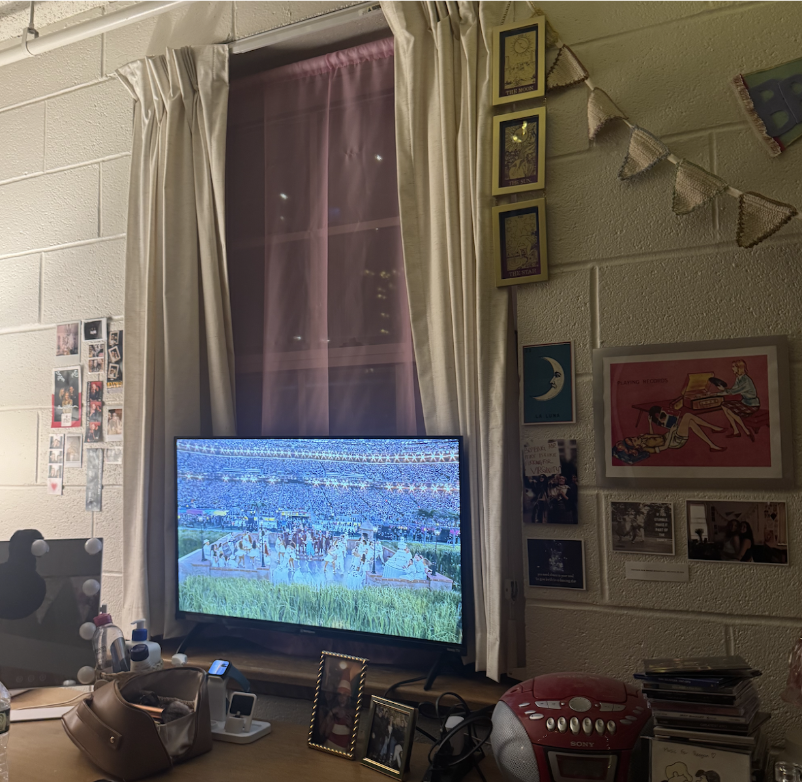
Photo credit: Maia Simmons
Every year, the Super Bowl halftime show promises a spectacle. This year? It delivered something altogether bigger: a moment of culture, identity, and unity set to a reggaetoon beat. Bad Bunny, born Benito Antonic Martinez Ocasio, didn’t just headline the Apple Music Super Bowl LX Halftime Show at Levi’s Stadium; he transformed it into a vibrant celebration of Puerto Rican and Latin American life.
From the first beat of “Titi Me Pregunto” booming through the stadium speakers, you could feel this wasn’t going to be your typical halftime performance. Benitio walked onto a field reshaped into a sugarcane landscape: dancers, workers, everyday scenes woven into the spectacle, and immediately grounded the performance in imagery familiar to the communities he represents.
In the background of the performance were many guest stars, including Pedro Pascal, Cardi B, Karol G, Jessica Alba, Ronald Acuna Jr., Emliano Vargas, Xander Zayas, and Alix Earle. Visual storytelling has become Bad Bunny’s signature, and this show was no exception. The stage morphed from a farm to a pink castia (a nod to his Puerto Rican residency), to market scenes, jewelry stores, people hanging out, and even a pickup truck's rooftop, where he delivered high energy for “Yo Perreo Sola”.
But the halftime wasn’t just about the music and the stage; it was about connection. Lady Gaga’s surprise salsa-infused performance of “Die With a Smile”, beside Benito, was a reminder that this was a shared celebration, a spotlight on mixing cultures. Ricky Martin’s appearance added another layer of legacy and pride.
Then there was the real wedding. A genuine couple exchanged vows during the performance. They exchanged vows, cut the cake and had their first dance under the stadium lights while Gaga performed. It felt less like halftime entertainment and more like a community all sharing this personal and unforgettable moment.
What makes this halftime show stand out wasn’t the choreography or star power; it was the intentionality behind it. Bad Bunny didn’t shy away from embedding social commentary into his set, whether through song choice or symbolic visuals. There is a moment where he hands a child a Grammy while the kid is watching him on TV. This act had a couple of different symbolic representations. One way of seeing it was a nod to the 5-year-old Liam Ramos, who was recently detained by ICE in Minneapolis. Another was that it was meant to represent Benito giving the award to his younger self.
And when the final moment came, him holding a football inscribed “Together We Are America”. Right behind him was a writing on the Jumbotron that read “The Only Thing More Powerful Than Hate is Love”.
In a year where music, sports, and culture constantly collide, Bad Bunny’s halftime performance didn’t just riff on pop spectacle; it put culture in motion, reminding us all why music matters, in football stadiums, in living rooms, and beyond.
Edited by: Maia Simmons