
The Psychology of Style
How What You Wear Can Lead to Greater Success.
by Ella Barchie ★ March 25th, 2026
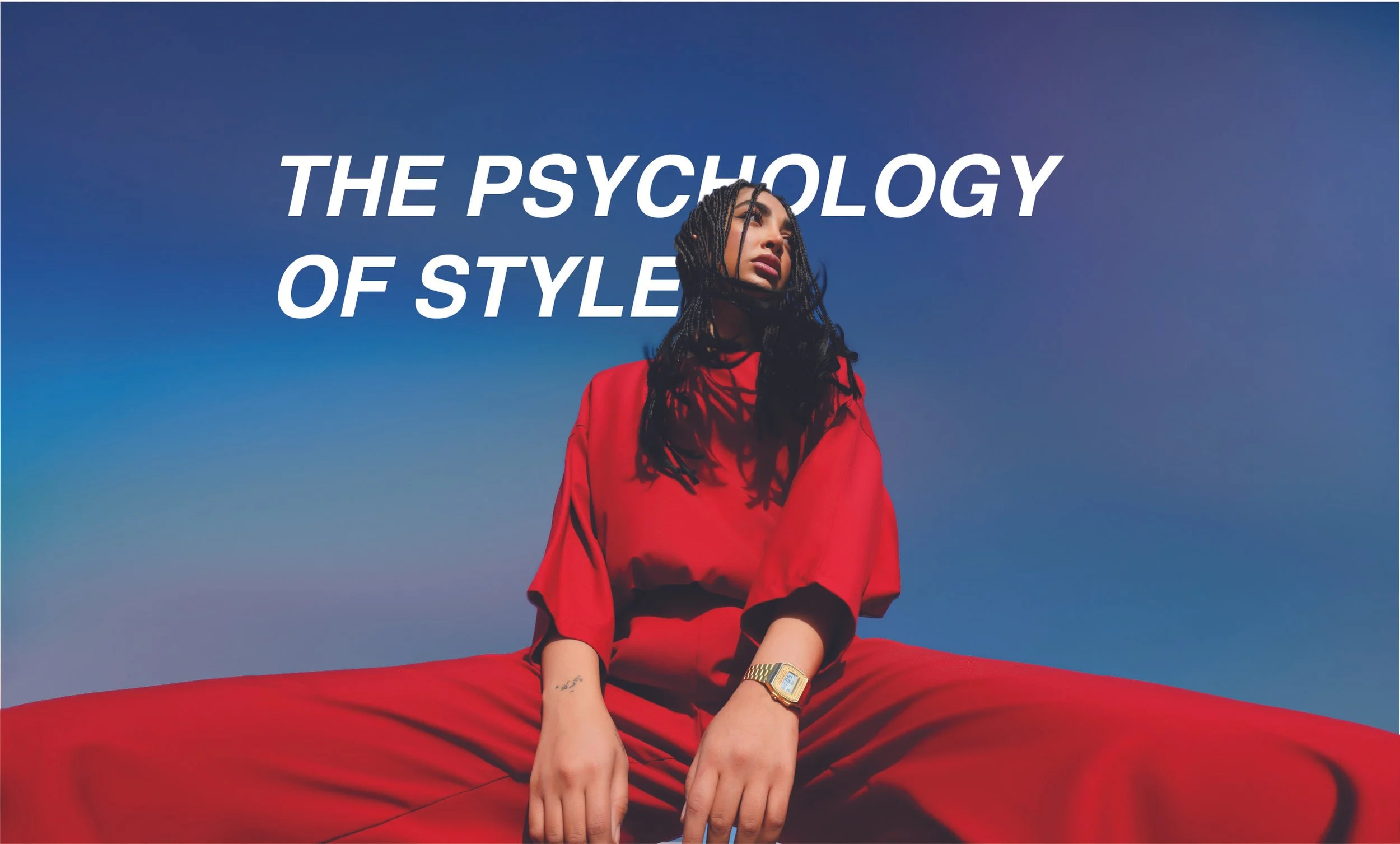
Design by: Maisy Wood
Across campus, personal styles greatly differ among students. There’s a constant variety in how they choose to dress, the most obvious difference being in fashionable comfort, or a bit more “upscale.” I find that when it comes to this, there is an essential question that we each must ask ourselves daily: “Is it better to dress for comfort or for style?” Although “fashionable” is a very ambiguous concept, there actually is an answer to this. When it comes to getting ready for class, it is better not to dress in loungewear.
There’s a science behind the relation between our mindsets and our clothes, called "enclothed cognition." This term describes the idea that what we, and others, choose to wear affects how we see ourselves, thus affecting our behavior. In 2012, researchers at Northwestern University found that wearing certain articles of clothing actually changed the way the wearer thought and behaved. The study had half of its participants wear a lab coat and the other half normal clothes. They then had all of them take the same basic test, and found that those wearing the coats made almost half the number of mistakes made by the latter group. Later experiments were similar in structure, but instead, one half would see the lab coats and not wear them. The results were similar: those wearing the coats made fewer mistakes.
Ultimately, researchers concluded that there’s symbolism to clothing, and when we wear these symbols, their meanings are reflected in our behavior. In the study, they stated, “These results suggest a basic principle of enclothed cognition: It involves the co-occurrence of two independent factors—the symbolic meaning of the clothes and the physical experience of wearing them.”
This idea goes both ways. Clothes like sweat pants or soft shirts are typically associated with pajamas or nighttime. So when we wear clothes like this to class, we match these symbols and go into sleep mode. It’s not just the professor’s too-long lecture that’s making us tired; it’s the clothes we wear, too.
Now that’s not to say that we need to dress in business clothes all day (although since clothes like that are associated with efficiency, it wouldn't hurt to wear them). There should be some confidence in what you wear, too. Otherwise, we fall victim to a phenomenon known as "cognitive dissonance," which is when we perform an action that does not align with our personal values or beliefs, leading to mental uneasiness. If what you wear doesn’t align with what you find fashionable, that leads to mental discomfort. It’s about finding that in between where your clothes don’t make you tired, but keep you from being anxious.
For me, I’ve found that this basically means choosing anything besides sweats, even if it’s just jeans. It keeps me away from feeling too tired or bored in class, but still aligns with the style I feel comfortable in and around others. Furthermore, even small things like accessories and bright colors can sometimes be enough to make your everyday outfit feel more enjoyable, making your whole day more enjoyable.
I stand by the idea that you should never judge a book by its cover. Fashion doesn’t ultimately decide who you are as a person. But it can help improve our minds. As we trudge through these last few weeks until summer break, paying attention to what we wear can even be enough to make us feel focused and confident – something that we all need occasionally.
Edited by: Kalia Hu