
Trumps Tariff Face Off with the Supreme Court
How the Supreme Court's ruling and Trump's new global tariff may impact American companies and consumers.
by Lily Smith ★ March 19th, 2026
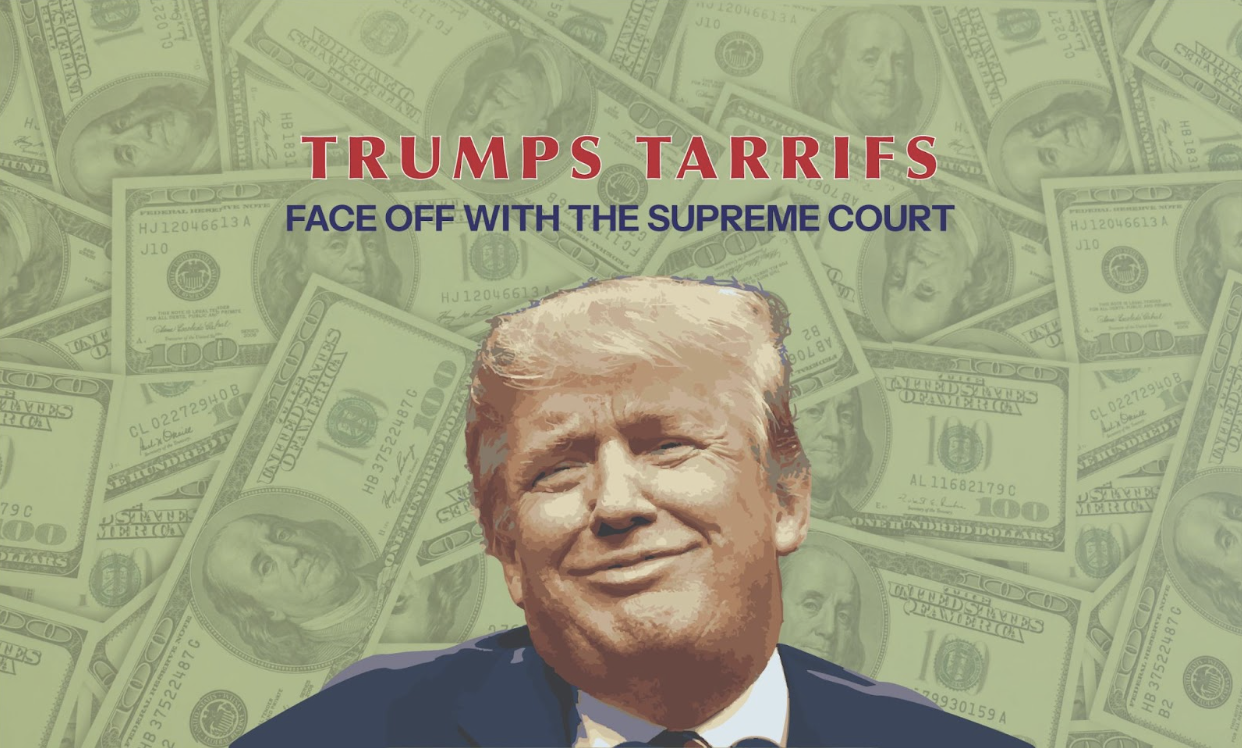
Design by: Maisy Wood
The Supreme Court struck down President Donald Trump's tariffs last week, and the effects of the decision on American companies and consumers continue to unfold.
Trump imposed new global tariffs at a flat rate of 15%. Many American companies, especially those subject to import taxes, grew worried as the tariffs took effect.
Trump enacted the tariffs under Section 122 of the Trade Act of 1974. These tariffs remain in effect for 150 days and require approval from congress to take full action.
The Trump administration is working to maneuver around the ruling in the Supreme Court case Learning Resources Inc. v. Trump. The court found that the International Emergency Economic Powers Act that Trump used to impose tariffs at the beginning of his second term did not grant him that authority.
The court’s conservative majority voted against Trump demonstrating independence from his party. This marked one of the first instances during his second term that the members of the president's party voted against him.
According to BBC.com, Trump called the justices who voted against him “fools and lapdogs.” Trump appointed both Justice Amy Coney Barrett and Justice Neil Gorsuch, two of the justices in dissent.
It remains unclear how the complex refunds process will work for American companies subject to Trump's tariffs.
The Supreme Court assigned the U.S. Court of International Trade and the lower courts
to begin refunding companies. The court directed Customs and Border Protection and the Treasury Department to conduct the process.
American importers may receive refunds of more than $100 billion in tariff revenue collected by the Trump adminsitration, but it could take months or years for these companies to receive full refunds due to legal processes and potential court battles.
For many companies that had adapted to Trump's tariffs, the ruling disrupted their wavering sense of economic security. James Knightley, the chief international economist at ING, said it is uncertain which companies could become stuck during this tariff changeover period.
A poll conducted before the ruling showed that 64% of Americans objected to Trump's tariffs. However, many economists say it is unlikely the ruling will affect prices of goods, especially with Trump's new global tariffs.
The tariffs contributed to the federal budget as a new source of revenue. The Trump administration projected that the tariffs would generate half of the revenue over the next nine years. The president plans to implement a collection of taxes to fill the gap.
The Court's ruling sets a legal precedent that will affect not only Trump's authority to impose levies but also global trade. The decision is likely to impact a future of long legal proceedings between American companies and the Trump administration and marks a setback for Trump and his tariff policy.
Edited by: Alexa Murland