
AI, Not So Shy Afterall
What happens when an author’s nightmare comes to life?
by Georgia Seward ★ April 9th, 2026
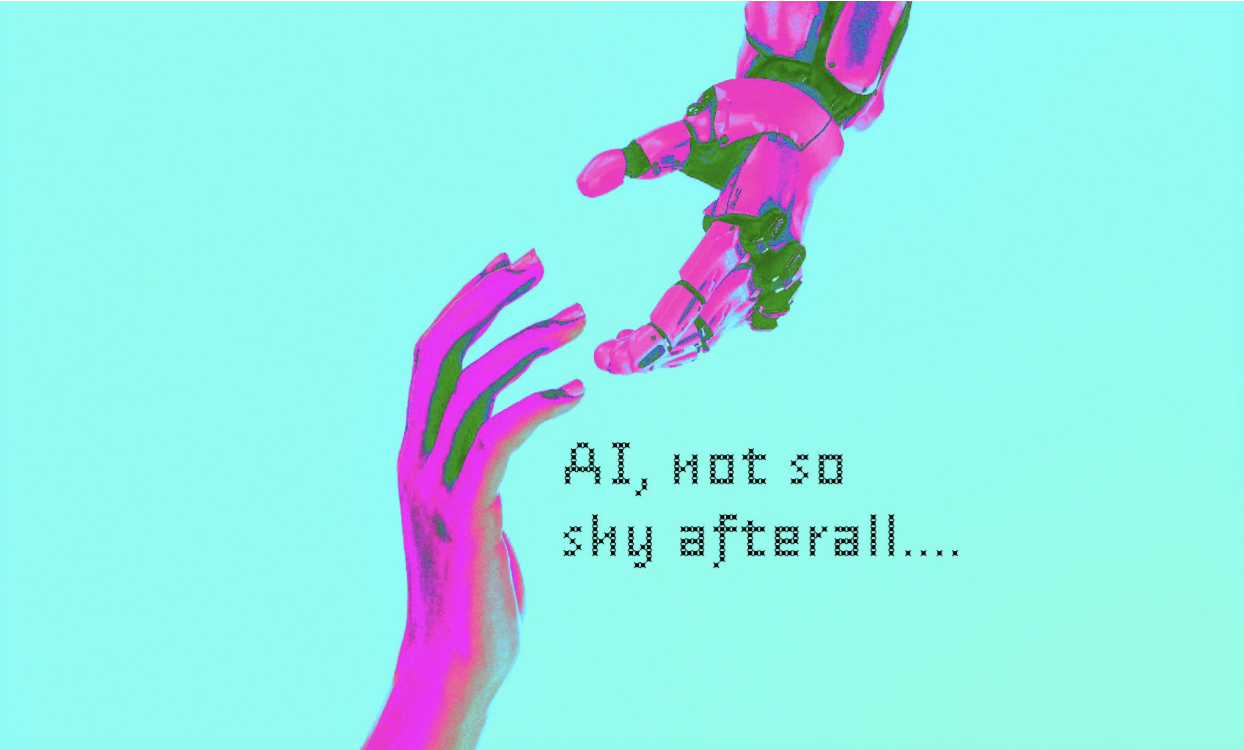
Design by: Maisy Wood
In 2026, the odds of getting a book traditionally published is 2%, with 90% getting rejected in the first round, with literary agents getting an average of over 10,000 submissions a year. It’s extremely rare and a writer’s biggest dream. So what happens when AI takes up that coveted spot?
The novel “Shy Girl" by Mia Ballard was an anticipated horror novel that was self-published in February 2025 and went viral on TikTok for its interesting plot. It follows a woman who enters a relationship with a wealthy man, and turns into a tale of captivity where she must live as his so-called “pet.”
Readers really connected with the themes of autonomy, revenge, and all-consuming feminine rage. So when the major publisher, Hachette, revealed they would pick it up for traditional release, it was exciting, and it caught new eyes.
But when new readers picked up the book, they found some oddities. Some flocked to the internet to share their thoughts on the book being written by AI. Earlier this year, a YouTube video, fittingly named “I’m pretty sure this book is AI slop,” racked up 1.3 million views and created a larger discussion online, putting heat on the publisher as well.
Now, in March 2026, Hachette has pulled “Shy Girl" from shelves in the UK and stopped publication completely in the United States. A report from the company, Pangram, came out that 78% of the novel is AI generated material, and The New York Times picked up the story. Since then, the author, Mia Ballard, has said she had no idea AI was used, and that it was an acquaintance she hired to edit the self-published version that used it.
But has too much damage already been done?
Storytelling is one of the oldest human art forms, and is one that is supposed to connect to the deepest parts of people’s souls and emotions. When there is no human involvement, is it even storytelling, or is it a meaningless mockery of it?
This whole drama worries future and current writers. Authors are beginning to worry they may have to change their own style of writing, one they have developed after years of practice, over fears of being accused of using AI.
But there is some hope. Hachette reacting quickly to the claim, sets a precedent that there is a zero AI tolerance, and discourages future authors from sneaking it into their novels. It also means there will be better protections in the future, a tightening on editorial, especially when acquiring self-published works.
There is a consensus however, AI will never come close to creativity and connection, and it never will. It’s up to those who publish and consume it to keep it that way.
Edited by: Bree Lauder-Williams